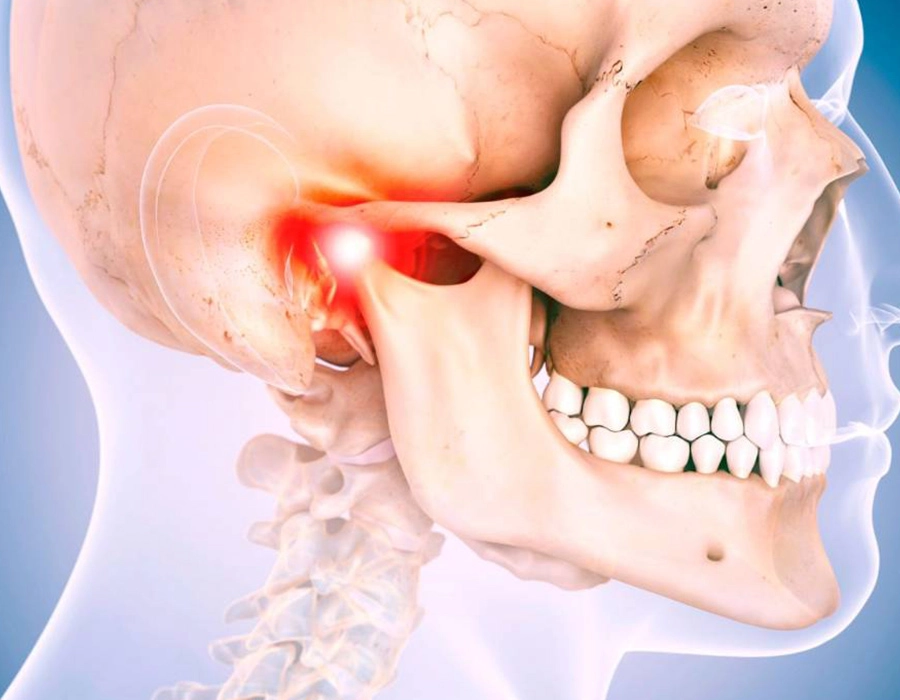
What is CMD?
CMD stands for craniomandibular dysfunction — a functional disorder of the masticatory system affecting the temporomandibular joints, masticatory muscles and adjacent structures. It often manifests as a range of symptoms that, at first glance, do not appear to be related.
Typical symptoms of CMD include:
- Jaw clicking or grinding when opening and closing the mouth
- Pain in the temporomandibular joint, jaw or masticatory muscles
- Restricted mouth opening
- Head and neck pain
- Tinnitus (ringing in the ears)
- Receding gums
- Teeth grinding (bruxism)
Causes of TMD
TMJ can have many causes: a poor bite (occlusal disorder), stress and tension, misaligned teeth, osteoarthritis of the temporomandibular joint, or a combination of these. Psychological stress and physical symptoms often exacerbate one another.
Treatment — often interdisciplinary
Treatment for TMD depends on the cause and is often interdisciplinary. Common measures include:
- Splint therapy: A custom-made bite splint (similar to a night guard) relieves pressure on the temporomandibular joint and relaxes the muscles.
- Physiotherapy: Targeted exercises and manual therapy for the masticatory muscles and temporomandibular joint.
- Bite correction: In cases of significant occlusal problems, orthodontic or restorative treatment may be necessary.
- Stress management: Relaxation techniques are a key component of treatment for stress-related teeth grinding.
Who is CMD treatment suitable for?
CMD treatment is beneficial for anyone suffering from typical symptoms such as jaw clicking, persistent head or neck pain, tinnitus or limited mouth opening — regardless of age. People going through stressful periods in their lives, as well as those who are known to grind their teeth or have bite problems, are particularly likely to be affected.
Important: TMD does not necessarily start with pain. Jaw clicking without pain is often an early warning sign — taking early action can prevent the condition from becoming chronic.
Our CMD treatment process
We begin with a thorough functional analysis: we examine the temporomandibular joints, masticatory muscles, bite and tooth alignment, and discuss your symptoms in detail. Based on this, we develop a personalised treatment plan — splint therapy is often the first step. The splint is fitted in our practice and adjusted as required. Depending on the findings, we may also refer you to a physiotherapist or other specialist.
Costs of CMD treatment
The costs depend on the type and extent of the treatment. A bite splint is the most common initial measure — we will provide you with transparent information about the costs in advance. In Switzerland, TMD is generally not covered by basic health insurance; depending on your supplementary insurance, part of the cost may be reimbursed.
TMJ in Zug — Neustadt Passage Dentists
If you suffer from jaw clicking, jaw pain or related symptoms, please take this seriously. The earlier CMD is treated, the more effectively chronic symptoms can be prevented. We will carefully analyse your findings and recommend the appropriate next step.
Interested? We’d be happy to advise you.
Book an appointment at our practice at Baarerstrasse 12 in Zug.