When is root canal treatment necessary?
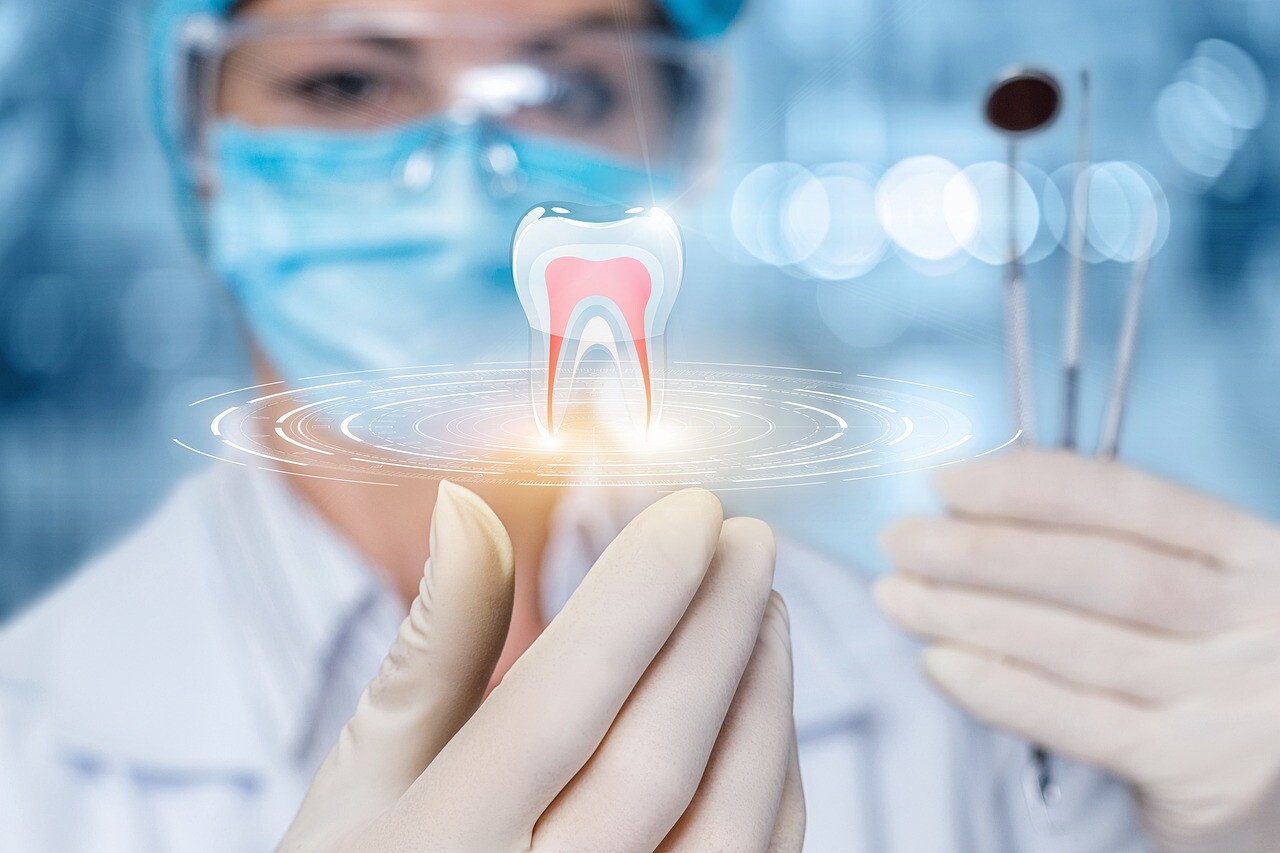
Treatment inside the tooth is necessary when the dental pulp — the pulp with its nerves and blood vessels — has become inflamed. This happens mainly when caries-causing bacteria have penetrated deep into the tooth. A dental injury can also make root canal treatment necessary.
Inflammation of the tooth root (pulpitis) is often very painful. Without treatment, it can spread to the jawbone and lead to serious complications. That is why a prompt assessment is important.
The endodontic treatment process
The treatment is carried out under local anaesthetic and is pain-free. The infected root canal is treated in several stages:
- Opening the tooth, removal of the inflamed nerve tissue
- Thorough mechanical and chemical cleaning of the canal
- Application of an antibacterial medication
- Sealing with a special biocompatible material
- Completion with a filling, an inlay or a crown
Depending on the findings and the number of canals, one or more appointments may be necessary. We will discuss this with you in advance.
Aim: To save the tooth
The overarching aim of endodontics is to preserve the tooth. A well-treated tooth can continue to function reliably for many years to come. This is generally preferable to extraction — because every tooth lost leaves a gap that can lead to misalignment, bone loss and other problems.
What happens after treatment?
Immediately after the procedure, the tooth may be sensitive or slightly sensitive to pressure for a few days — this is normal and will subside. The treated tooth then usually requires a stable restoration: a crown or an inlay protects it from further stress and provides long-term stability. We’ll discuss the best solution with you.
How long does a treated tooth last?
With the correct restorative treatment and good oral hygiene, a tooth that has undergone root canal treatment can last for decades. Regular check-ups are important — this allows us to identify at an early stage if any follow-up treatment is required.
Costs of endodontic treatment in Zug
The cost of endodontic treatment depends on the number of root canals and the degree of difficulty involved. We will provide you with transparent information in advance. In Switzerland, basic health insurance covers part of the costs — particularly if preserving the tooth is medically justified. We will clarify this with you before the procedure.
When does a tooth need to be extracted after all?
Not every tooth can be saved. If the bone surrounding the tooth has deteriorated too severely, the root is fractured, or the tooth is too badly damaged by tooth decay, extraction may be the more sensible solution. We assess the situation honestly — and only recommend saving the tooth if it makes sense in the long term.
Root canal treatment in Zug — Neustadt Passage Dentists
If you have severe toothache or suspect an inflamed root, don’t wait too long. Contact us — we’ll treat you promptly and pain-free at Baarerstrasse 12 in Zug.
When does a tooth need to be extracted after all?
Not every tooth can be saved. If the bone surrounding the tooth has deteriorated too much, the root is fractured, or the tooth is too badly damaged by tooth decay, extraction may be the more sensible solution. We assess the situation honestly — and only recommend saving the tooth if it makes sense in the long term. If the tooth needs to be extracted, we’ll discuss the best options with you: an implant, a bridge or a removable denture.
Costs of endodontic treatment in Zug
The costs depend on the number of canals and the degree of difficulty. We’ll provide you with transparent information in advance. In Switzerland, basic health insurance covers part of the costs if preserving the tooth is medically justified. We’ll clarify this with you before the procedure.
Interested? We’d be happy to advise you.
Book an appointment at our practice at Baarerstrasse 12 in Zug.