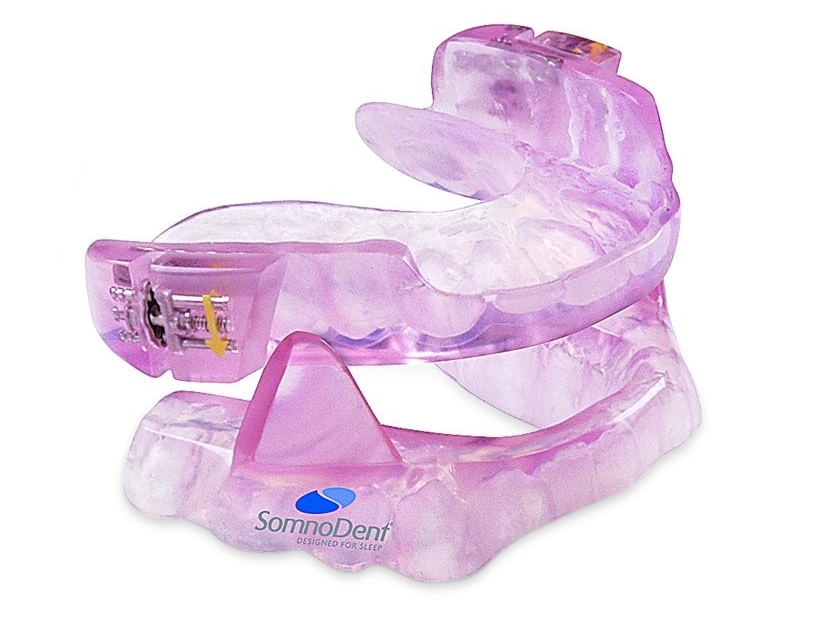
How does an anti-snoring mouthpiece work?
Known as a mandibular advancement splint (MAS), it is fitted over both rows of teeth and holds the lower jaw slightly forward. This opens up the throat, prevents the tongue from falling back and improves airflow — significantly reducing snoring or stopping it altogether.
The splint is made of hard plastic, custom-made to fit your teeth and very comfortable to wear. Most patients get used to it quickly.
Who is the anti-snoring splint suitable for?
This form of treatment is well suited to:
- Primary snoring (without sleep apnoea)
- Mild to moderate obstructive sleep apnoea — as an alternative or supplement to a CPAP mask
- Patients who cannot tolerate a CPAP mask
In cases of severe sleep apnoea, it is important to consult a doctor — the anti-snoring mouthpiece cannot adequately treat all cases of sleep apnoea.
Procedure and fitting
Following a consultation, we’ll take an impression or digital scan of your teeth. The bespoke mouthpiece is then manufactured in the laboratory. During the fitting appointment, we’ll adjust the lower jaw to the optimal forward position. A follow-up appointment a few weeks later is important so that we can fine-tune the mouthpiece if necessary.
Costs and reimbursement
The cost of a bespoke protrusion splint depends on the design and the laboratory. In Switzerland, basic health insurance does not usually cover the costs — depending on your supplementary insurance, a portion may be reimbursed. Compared to chronic sleep deprivation or untreated sleep apnoea, the investment is manageable. We will provide you with transparent information in advance.
Anti-snoring splints in Zug — Neustadt Passage Dentists
If you or your partner suffer from snoring, you’re in good hands with us. We’ll give you honest advice on whether a customised sleep splint is the right solution for you — or whether further assessment would be advisable. Book an appointment at Baarerstrasse 12 in Zug.
Snoring and sleep apnoea — what’s the difference?
Many people confuse simple snoring with sleep apnoea. The difference is important: with primary snoring, the person breathes normally — the airflow is simply loud. With obstructive sleep apnoea, on the other hand, breathing briefly stops, the body wakes up briefly, and sleep is fragmented. The consequences include daytime tiredness, difficulty concentrating and, in the long term, an increased risk of cardiovascular disease. A custom-made mouthpiece can be very effective for primary snoring — for sleep apnoea, its effectiveness has been proven for mild to moderate cases; for severe cases, medical treatment with a CPAP machine is generally preferable.
Tips for better sleep without aids
In addition to a protrusion splint, there are measures that can help reduce snoring: sleeping on your side rather than on your back, losing weight if you are overweight, avoiding alcohol in the evening and maintaining a regular sleep schedule. These measures do not replace a custom-made splint — but they can enhance its effectiveness. We are happy to provide comprehensive advice if required.
Interested? We’d be happy to advise you.
Book an appointment at our practice at Baarerstrasse 12 in Zug.