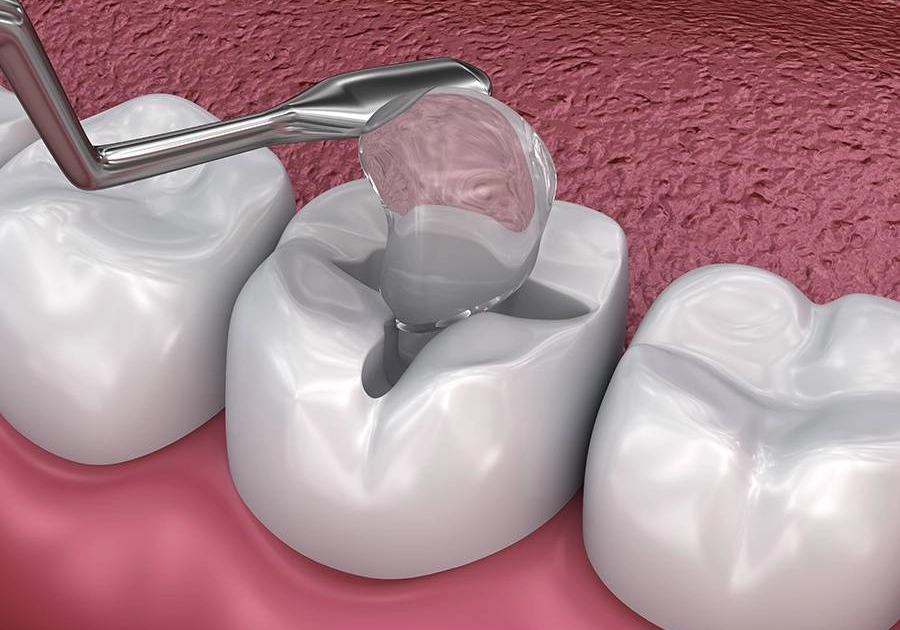
What is a ceramic filling?
A bespoke restoration made from dental ceramic is precisely fitted into the cleaned tooth cavity. Unlike composite fillings made from plastic, ceramic is not applied directly, but is milled using computer-aided technology or fabricated in the laboratory.
Ceramic is the most natural material available in dentistry: it reflects light in a similar way to real tooth enamel, is biocompatible, colour-stable and extremely durable. Coffee, tea and red wine leave no marks on ceramic — unlike with plastic.
When is a ceramic filling recommended?
- Larger tooth defects caused by tooth decay, where a composite filling would no longer provide sufficient stability
- Replacement of old amalgam fillings with an aesthetic, long-lasting alternative
- Molars subjected to high chewing forces
- Patients who want a particularly durable and colour-stable solution
Fabrication: CEREC in a single appointment or in the laboratory
We fabricate ceramic fillings either using our CEREC 3D® system in a single appointment — digital scan, milling and placement without the need for a dental laboratory or a temporary restoration — or, in more complex cases, by our dental technician in the laboratory (2 appointments approximately one week apart).
Ceramic vs. composite:
Ceramic dental restorations are more expensive than composite fillings, but significantly more durable. In the long term, the higher-quality solution may be the more cost-effective choice, as it needs to be replaced less frequently.
Treatment procedure
First, the affected area is numbed locally and the tooth defect is completely removed. We then take a digital scan of the prepared tooth — the data set is sent directly to our CEREC system or to the dental laboratory. The result is a bespoke restoration that is precisely tailored to your tooth. During placement, the restoration is fitted, the bite is checked and it is permanently bonded in place. With the CEREC method, there is no need for a separate impression appointment or a temporary restoration.
Care and durability
Dental restorations made from dental ceramics are easy to look after: normal brushing, regular professional dental cleaning and six-monthly check-ups are sufficient. With good care, a high-quality restoration will last 15–20 years or longer. Staining from coffee, tea or red wine is virtually non-existent on ceramic — the material retains its natural appearance permanently.
Cost of a ceramic dental restoration in Zug
The cost depends on the size of the defect and the method of fabrication. We will provide you with transparent information in advance. Restorations made from high-quality dental ceramics are more expensive than composite fillings — but are often the more economical choice in the long term, as they need to be replaced much less frequently.
Ceramic fillings in Zug — Neustadt Passage Dentists
We’d be happy to advise you on whether a ceramic filling, an inlay/onlay or a composite filling is the most suitable option for your tooth. Book an appointment at Baarerstrasse 12 in Zug.
Who would particularly benefit from a ceramic dental restoration?
People who value aesthetics and durability benefit particularly from dental ceramics. This applies above all to visible teeth in the posterior region, to patients with a known tendency for discolouration caused by coffee or tea — and to anyone looking for a long-term solution rather than having repairs every few years. A ceramic restoration is also the most aesthetically pleasing option for existing amalgam fillings that need replacing.
Interested? We’d be happy to advise you.
Book an appointment at our practice at Baarerstrasse 12 in Zug.