When do I need a dental filling?
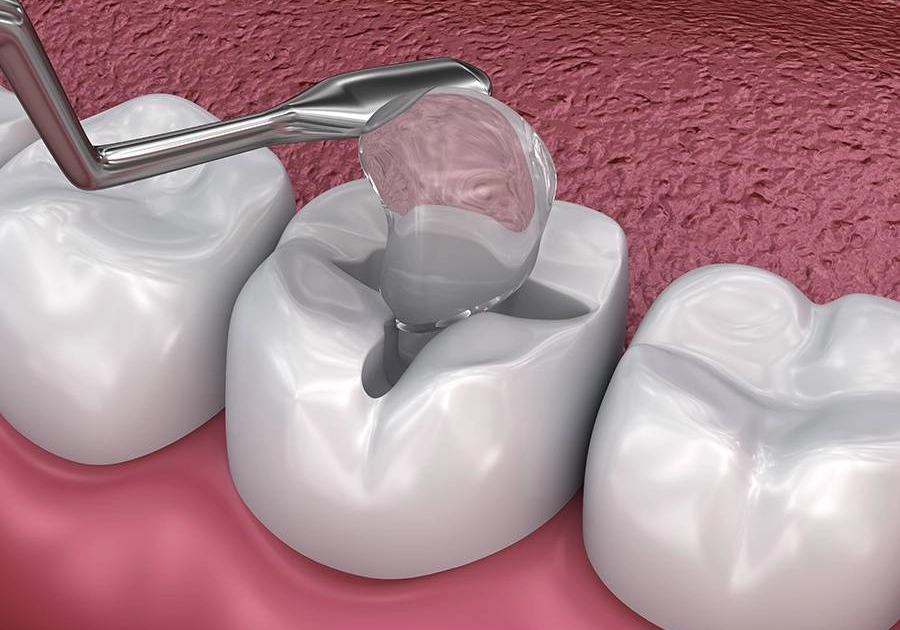
A dental filling is always necessary when tooth structure has been lost — most commonly due to tooth decay, but also due to wear and tear, cracks or broken pieces of the tooth. The aim of the filling is to restore the tooth’s original shape, function and appearance, and to protect it from further damage.
The earlier tooth decay is detected and treated, the smaller the filling will be — and the more healthy tooth structure will be preserved. That is why regular check-ups are so important.
What filling materials do we use?
We use only tooth-coloured, aesthetic materials — no amalgam:
- Composite (plastic): A tooth-coloured filling applied directly. Completed in a single appointment. Ideal for small to medium-sized defects in visible areas.
- Ceramic: More durable, biocompatible and colour-stable than plastic. For larger defects. Fabricated using CEREC (1 appointment) or in the laboratory (2 appointments).
How does the treatment work?
First, we anaesthetise the affected area to ensure the treatment is pain-free. Then, the decayed tooth structure is carefully removed. The tooth is then prepared and the filling placed — in layers and cured immediately in the case of composite, or via scanning and milling or laboratory work in the case of ceramic. Finally, the filling is adjusted to the bite and polished.
Fillings in Zug — Neustadt Passage Dentists
We’d be happy to advise you on which material is best suited to your tooth — depending on the size of the cavity, its location in the mouth and your preferences. At our practice at Baarerstrasse 12 in Zug, we treat tooth decay gently, quickly and with results that look natural.
Interested? We’d be happy to advise you.
Book an appointment at our practice at Baarerstrasse 12 in Zug.