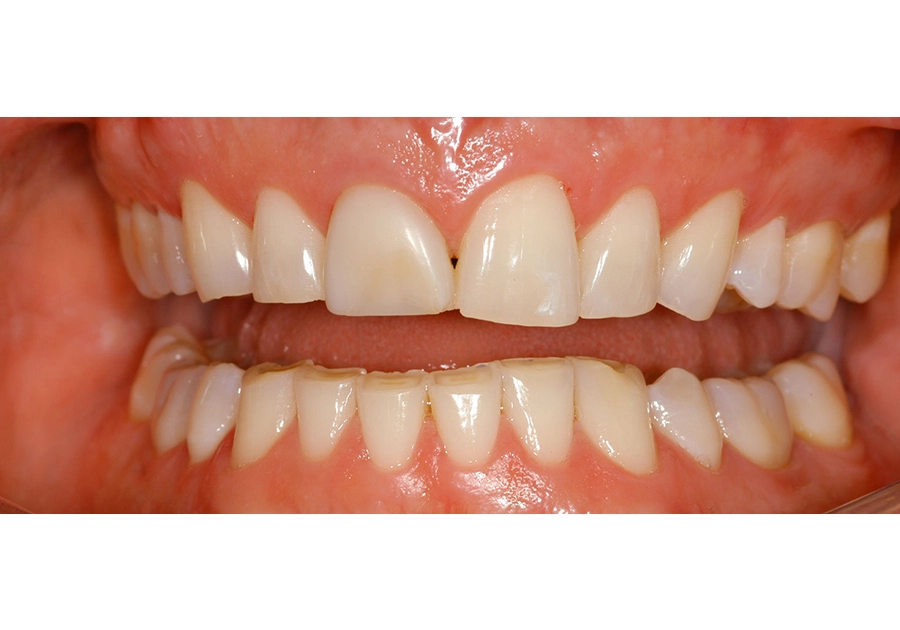
What is bruxism?
Bruxism is the unconscious grinding, clenching or rubbing of the teeth — usually whilst sleeping, but sometimes also during the day when under stress. It is very common: it is estimated that one in every eight to ten adults grinds their teeth regularly.
The causes are varied — stress and tension are common triggers, but misalignment, sleep disorders or certain medications can also play a role. Many people who grind their teeth are unaware of it — it is often their partner who notices the sound, or the dentist who discovers signs of wear during a check-up.
Consequences of teeth grinding
- Wear away of the cusps, enamel abrasion
- Cracks and chips
- Tooth sensitivity
- Jaw pain and muscle tension
- Headaches and neck pain
- Temporomandibular joint (TMJ) problems
- Damage to fillings, crowns and other restorations
The teeth-grinding splint
A night guard (occlusal splint) is a custom-made plastic splint that is fitted over the teeth of one jaw — usually the upper jaw. It absorbs the forces generated by teeth grinding, protects the tooth surfaces and relieves pressure on the temporomandibular joint and masticatory muscles.
The splint is custom-made based on an impression or digital scan of your teeth — a perfect fit is crucial for comfort and effectiveness.
Important:
A night guard treats the symptoms — it does not cure bruxism. It protects the teeth and relieves pressure on the temporomandibular joint, but the underlying cause (often stress) should be addressed at the same time.
Teeth-grinding splint in Zug — Neustadt Passage Dentists
If you wake up in the morning with jaw pain or a headache, if your dentist has noticed signs of wear, or if you grind your teeth at night — please get in touch. We’ll make your bespoke mouthguard and provide you with comprehensive advice.
Interested? We’d be happy to advise you.
Book an appointment at our practice at Baarerstrasse 12 in Zug.